An enigmatic triviality, as if we were watching the way things evolve in a neighborhood of slightly crazy but very determined inventors.
🐳 Containers: When the neighbor’s computer was no longer an excuse.
First, there was the usual problem:
«But it works on my computer!»
And of course, that was because the computer had its configured daemons, flailing dependencies, and half-baked versions.
Thus, Docker was born, like that standardized lunchbox you put your lunch in and know it will taste the same at home, in the park, or on the top of Everest.
☸️ Kubernetes: The Tower of Babel… but with YAML
Then they said:
«What if I have 100 lunchboxes? What if one falls? What if they have to be rotated?»
And so Kubernetes was born, which is more than a tool, it’s almost an act of faith: it coordinates your lunchboxes, replicates, balances, scales… and yes, it also forces you to write YAML with reverence.

🧠 LLMs: from statistical parrot to wise neighbor.
Something similar happened with language models. At first, they responded like those colleagues who memorize without understanding:
«The capital of France is… Paris.»
But if you asked them «What makes you think that?» they froze.
Then came humanoid NLP, the «I want you to answer me as if you were my colleague, not like Wikipedia with social anxiety.»
We worked on fine-tuning, instruct models, and then chat-based interfaces.
And since we wanted them to answer things beyond what they knew beforehand, we saw:
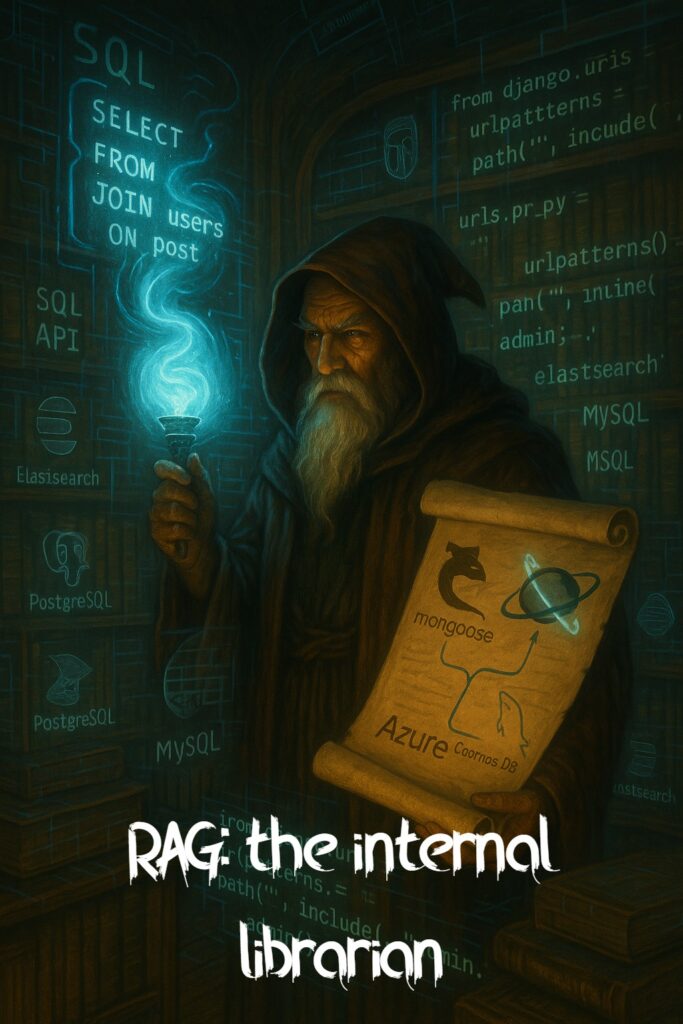
📚 RAG: the internal librarian
«Hey, model, you don’t need to know everything, just look it up!»
Thus, RAG (Retrieval-Augmented Generation) was born, like a model with a librarian running through the shelves and whispering the answer just before the model speaks.
The model is no longer so invented: ask, search, summarize, answer. More useful, more connected.
🕵️ Agents: when the model no longer just answers, but acts
Then another ambition emerged:
«I want it to do things. To navigate, to calculate, to call APIs, to read databases.»
And from there came the agents.
And then beyond: multi-agents, with agendas, roles, and tasks.
But oh… the chaos! Everyone was talking at once, like in an unmoderated WhatsApp group.
Then someone said:
«We need a mental operating system for these agents.»
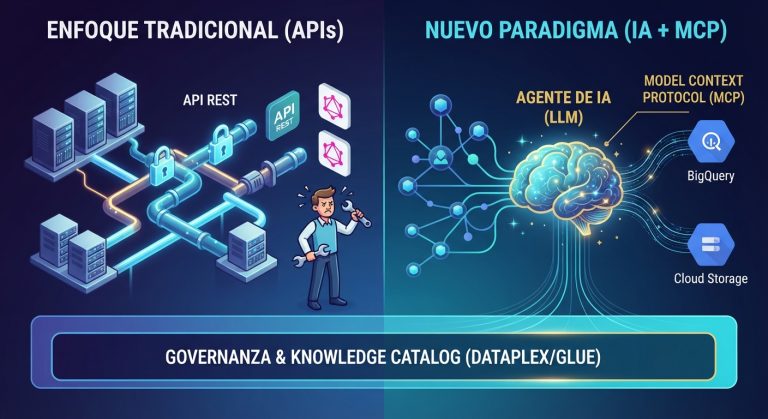
And so came tools like CrewAI, Autogen, and more recently MCPs (Multi-Agent Collaboration Protocols):
a kind of roundtable where each agent has an assigned voice, makes decisions, reasons together, and sometimes even contradicts each other like good humans.
🔮 What’s next? Write your prediction in the comments…
 Save as PDF
Acerca del autor